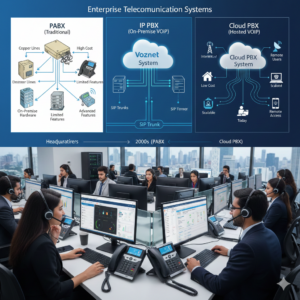
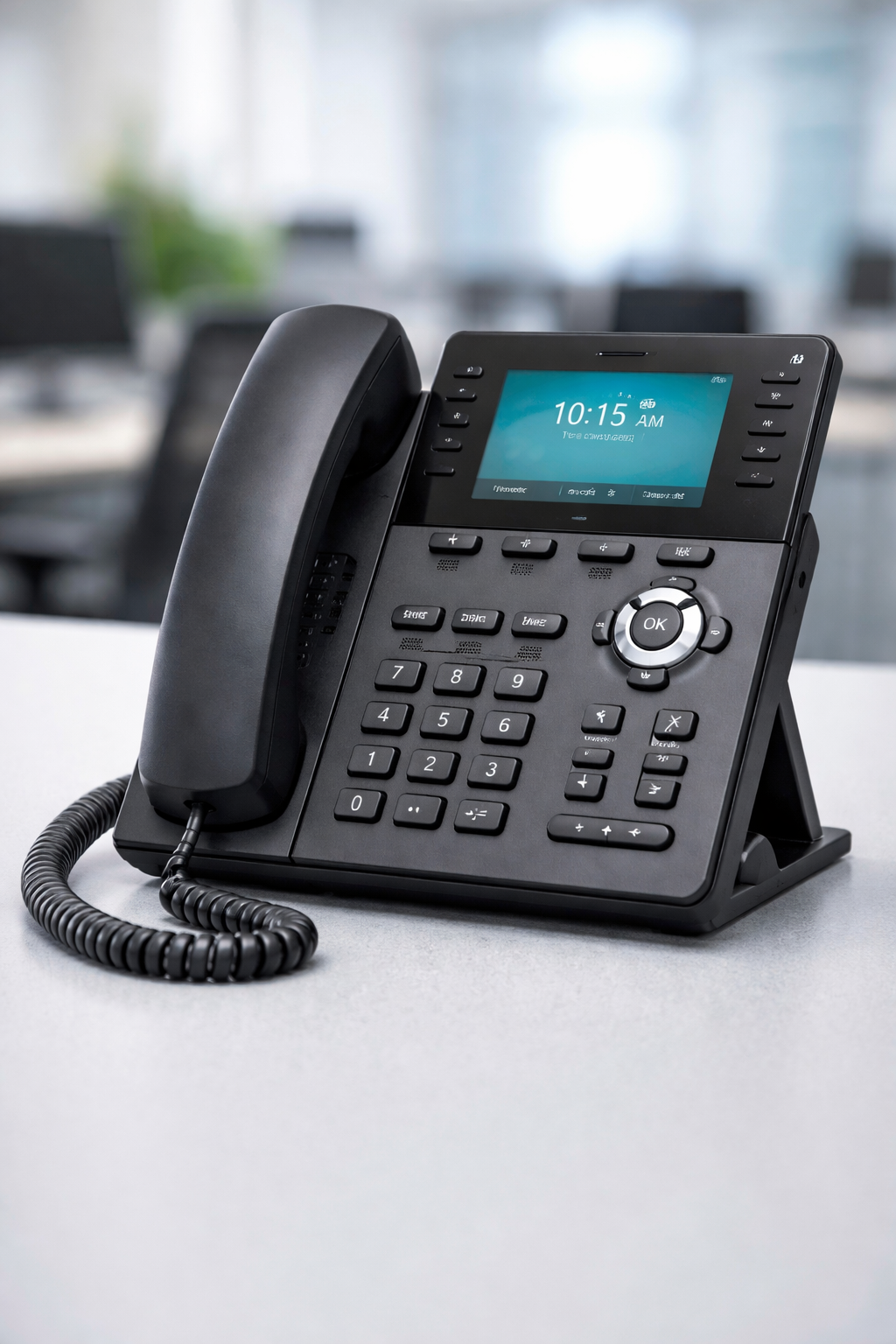
An IP (Internet Protocol) Phone is a device that uses an internet connection to transmit voice calls, replacing traditional analogy phone lines connected with (Analog Exchange) PBX. It converts voice into digital packets and sends them over a data network.
Key Characteristics of Basic IP Phones:
- Network-Based: Connects directly to a Local Area Network (LAN) via an Ethernet cable or Wi-Fi.
- SIP Protocol Support: Uses the Session Initiation Protocol (SIP) standard to register with a VoIP service provider or IP-PBX.
- Core Features: Typically includes a keypad, display, handset, and built-in features like hold, mute, transfer, and a basic address book.
- Power Options: Can be powered via a power adapter or directly through the network cable (Power over Ethernet – PoE).
- Audio Quality: Supports standard HD Voice codecs (e.g., G.711, G.729) for clear audio.
- Plug-and-Play Setup: Designed for easy deployment with minimal configuration.
Primary Benefits for Clients:
- Cost Reduction: Eliminates traditional phone lines and reduces long-distance/international call charges by using the existing data network.
- Simplified Infrastructure: Converges voice and data onto one network, reducing cabling and maintenance complexity.
- Mobility & Flexibility: Allows easy extension moves, adds, and changes without rewiring. Users can often log into their phone extension from any location.
- Foundation for Advanced Features: Serves as an entry point to a unified communications ecosystem, enabling future upgrades to video calling, integration with softphones, and CRM integration.
- Scalability: Adding new phones is typically simpler and cheaper than expanding a traditional phone system.
Ideal Use Cases:
- Small to medium-sized businesses (SMBs) migrating from analogy systems.
- Remote or home office workers needing a dedicated business line.
- Any organization seeking a reliable, cost-effective foundation for voice communication.
- better customer engagement
Conclusion: Basic IP phones offer a practical, feature-rich, and economical first step into modern VoIP communications, providing immediate cost savings and operational flexibility while paving the way for more advanced unified communications solutions.